
As was described in the first part, “copyleft” can be translated into simple words as an obligation to license modifications of original work under the terms of the license governing the original use. However, when does this obligation arise? There are many activities that might bear significance – changing the form in which the work […]
Tag Archives | copyleft

The scope of “copyleft“ effect: What’s right and what’s “left“? (part II – Triggering “copyleft”)
By Matej Gera 6 September 2015 0

The scope of “copyleft“ effect: What’s right and what’s “left“? (part I – Introduction)
By Matej Gera 5 May 2015 0
March 2015 marks the 30th anniversary of the publication of one of the first and most prominent documents presenting “copyleft” idea. Richard Stallman’s publication of the “GNU Manifesto” (available here) – announcing the development of a software system which would be freely distributable and modifiable – occurred on March 1985. It has since spawned a […]

What do the Pirate Parties represent? When IP becomes politics
By Alain Strowel 26 September 2012 22
Over the last years, the Pirate Parties, in several European countries, have presented candidates at national or local elections and they even got some seats in various parliaments. At the September 2009 general election in Germany, the local Pirate Party – Die Piratenpartei – secured a respectable 2% of all votes. At the 2011 local […]
Le brevet est-il soluble dans les modèles ouverts ?
By Yann Ménière 26 April 2011 66
Les modèles ouverts de création reposent sur une utilisation originale des droits de propriété intellectuelle, non pour restreindre l’accès à une ressource, mais au contraire pour le garantir et le pérenniser. Ils ont fait leur preuve dans le domaine du logiciel libre, mais aussi, dans une certaine mesure, des créations littéraires et artistiques avec les […]
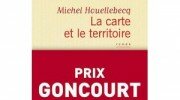
Un livre devenu libre par emprunt? Le suites du plagiat de M. Houellebecq, prix Goncourt pour “La carte et le territoire”
By Alain Strowel 5 December 2010 45
L’affaire du plagiat de M. Houellebecq, le prix Goncourt 2010, connaît des rebondissements inattendus. En septembre dernier, un journaliste révélait que certains passages de “La carte et le territoire”, le dernier roman de M. Houellebecq, plagient trois articles de Wikipedia (sur la mouche domestique, le politicien Frédéric Nihous et la ville de Beauvais). Ce n’est […]