

(Updated in November 2013) As we have already argued a couple of times on this blog (see here and here), markets for patents are typically difficult to organize. There are three main reasons as to why markets for patents work badly: Many uncertainties surround the value of patents. This is mainly because patents are idiosyncratic (and […]
Patent/Related rights RSS feed for this section

Good IP tidings we bring…
By 18 December 2012 0
As Christmas is drawing nigh, I found it fun appropriate to collect a number of “IP Xmas stories”. As you will discover below, these stories add some Christmas spirit to the IP, IT and innovation issues that we regularly discuss on this blog. * Like everyone, I loathe love poinsettias. Because they blossom […]

Commercialization strategies for start-ups: Examples
By 4 December 2012 0
In a previous post, I asked my students to illustrate the typology that Gans & Stern (2003) proposed for commercialization strategies of technology entrepreneurs. The operation was an enormous success as each of the four generic strategies received a fair number of examples, with very useful references. Here follows a compilation. Many thanks to all the […]

Commercialization strategies for start-ups
By 8 November 2012 31
In a paper published in Research Policy in 2003 (Vol 32, pp. 333-350, click here for the working paper version), Joshua Gans and Scott Stern propose a typology of commercialization strategies for technology start-ups. They start from the observation that “the main problem [for start-ups] is not so much invention but commercialization.” This is because these firms are […]

A shorter patent term for some innovations?
By 14 October 2012 52
In a recent article (October 7, 2012), entitled, “The patent, used as a sword“, the New York Times gives a critical view of the current state of the US patent system: Patents are vitally important to protecting intellectual property. Plenty of creativity occurs within the technology industry, and without patents, executives say they could never […]

The smartphone patent wars and competition policy
By 25 April 2012 13
Last Wednesday (April 18, 2012), Lucy Koh, a US District Court Judge, may have paved the way towards a truce on one of the fiercest fronts of what is now commonly known as the “Smartphone Patent Wars”. She ordered Tim Cook and Choi Gee-Sung, the CEOs of Apple and Samsung, to meet and work out […]
Mobile industry in Google’s cross-hairs
By 6 March 2012 14
Though a late-comer to the mobile market, Google has nonetheless made a rather spectacular entrance. Android, its operating system for smartphones, is running on millions of mobile terminals manufactured by other companies under their own brands. The key to Google‘s success is the fact that Android is open-source, and thus freely distributed. This has allowed […]
Seeds protection: when Monsanto tests the limits of patent in the EU and the U.S.
By 11 December 2011 27
Two similar, but nevertheless quite different, cases brought before the Court of Justice of the EU and the U.S. Court of Appeal for the Federal Circuit allow to compare the scope of patent protection for genetically modified organisms on both sides of the Atlantic. In the EU case, Monsanto v. Cefetra (C-428/08), Monsanto had first relied […]

What to think of ‘patent trolls’? The return
By 31 October 2011 76
In a previous post last year, I was presenting different views on so-called patent trolls, which are sometimes defined as “companies that do not invent anything but instead purchase patents and use them to sue big companies with deep pockets” (paidcontent.org). This negative view of patent trolls is widely shared nowadays and has prompted President Obama and the […]
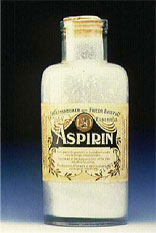
Bayer’s aspirin: a lasting success without patent and strong trademark protection
By 28 October 2011 0
‘The serial painkiller’: this is how the Financial Times (27 oct. 2011, see here) describes the history of aspirin, the well-known medicine invented more than a century ago, when Bayer’s chemist Felix Hoffmann synthetized a stable form of its active ingredient. Aspirin is undissociable from Bayer, but the benefits of its active ingredient were apparently […]
← Previous 1 2 3 4 Next →